Welcome Message

twitter

Follow on Tweets

3D Camera Market - Forecast(2020 - 2025)

Posted in , , , , ,

 Global 3D Camera Market: Overview

A 3D camera is an imaging device which uses depth sensing technologies to take the photocopy of three-dimensional objects. Time-of-flight principle is used by 3D cameras to measure the distance between the sensor and the nearest surface point. The stereo camera is a type of 3D camera that is mainly used for making stereo views, range imaging, and 3D photos for movies. The image sensors present in stereo cameras will allow cameras to simulate human binocular vision and captures the 3D photocopies. 

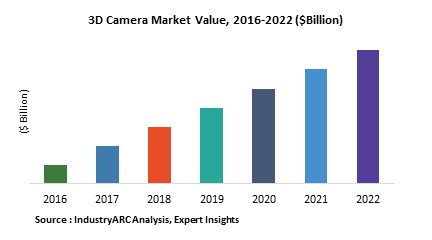
According to this research report from IndustryARC, the 3D camera market size was between $1,200 million to $1,600 million as of 2018. The market demand is projected to grow at a hefty CAGR of 35% to 42% during the forecast period of 2019 to 2025. The increasing usage of 3D cameras in making 3D movies, photography, smartphones, and navigation systems are the factors driving the growth of the market during the forecast period of 2019 to 2025.

Global 3D Camera Market: Outlook

3D camera has a wide range of application such as gaming, general photography, healthcare, logistics and automotive. Among these various applications, 3D cameras are mainly used for the general photography purpose and the demand for this application is estimated to grow with an excellent CAGR of 30% to 35% during the forecast period 2019-2025. The main factors which are driving the growth for the general photography application are increasing people’s interest to click the pictures of surroundings, places they visit, and their own pictures to save memories. 

APAC held the largest share of 38% to 45% in 2018 in the global 3D camera market. China is the global leader in the manufacturing of consumer electronics goods such as smartphones, tablets, and laptops. In 2018, 100 million smartphones are manufactured by using 3D cameras in China and are shipped to the entire world[1].  Rising demand for 3D cameras in the manufacturing of smartphones is boosting the growth of the market in this region. 


Global 3D Camera Market: Growth Drivers 

  • Creating Virtual 3D Model of User by 3D Camera –
Increasing usage of 3D sensors for the applications of cameras in smartphones is driving the growth of the 3D cameras market. 3D sensors in smartphones are changing the future of shopping by creating the virtual 3D model of a user. Using this model, consumers can easily scan their body parts such as head and face to virtually try on requirements like hats and spectacles.

  • Usage in Robots –
The application of 3D cameras in robots is another factor driving the growth of the market. Current 3D camera technology allows robots to respond autonomously to different situations by analyzing their surrounding environment. 

Global 3D Camera Market: Challenge

The major challenge for the growth of the 3D cameras market is regarding cost issues. Despite of its uses in various industries such as logistics, automotive, and gaming, 3D cameras are available in the market at a highly expensive, so they are acquiring demand from a very limited section of our society. Therefore, the sales of the market are less when compared to the other camera technologies such as 2D. 

Global 3D Camera Market Players Perspective:

Fujifilm 3D cameras are used to shoot excellent 3D movies and photos on spot within a short period of time because of their effective pixels. Fujifilm’s latest innovation FinePix REAL 3D W3 digital camera consists of features such as anti-blur and super intelligent flash. It is used as both 3D and 2D shooting camera. It contains effective 10.0 megapixels with 3.5 inch LCD monitor and 3.0x optical zoom. It also contains different types of shooting modes such as SP mode, ADV 3D mode, and ADV 2D mode which is mainly attracted by the people interested in photography. 

Canon, GoPro Inc., Eastman Kodak Co, LG, Sony Corporation, Faro technologies, Matterport Inc., Lytro Inc., Nikon, and Panasonic Corporation are the other players operating in the 3D camera market.


Global 3D Camera Market: Trend

  • Application in Driver Assistance Systems –
3D cameras are used as range cameras in the cars to detect the position of the car on the road. Using these sensors in the system's driver is warned regarding the vehicle approaching from behind so that he can change the lane and also it detects the deviation from the lane and warns the driver by vibrating the seat. 

  • 3D Cameras in Drones –
RealSense is an autonomous 3D camera which is used to detect and avoid obstacles in drones. Users can launch drones and they can do their own works by forgetting about them until they land. Airdog is a small, 3D camera-equipped drone which is programmed to follow user and make a video of surroundings.

3D Camera Market
Global 3D Camera Market: Research Scope

The base year of the study is 2018, with forecast done up to 2025. The study presents a thorough analysis of the competitive landscape, taking into account the market shares of the leading companies. It also provides information on unit shipments. These provide the key market participants with the necessary business intelligence and help them understand the future of the 3D camera market. The assessment includes the forecast, an overview of the competitive structure, the market shares of the competitors, as well as the market trends, market demands, market drivers, market challenges, and product analysis. The market drivers and restraints have been assessed to fathom their impact over the forecast period. This report further identifies the key opportunities for growth while also detailing the key challenges and possible threats. The key areas of focus include the types of 3D camera market and their specific applications in different types of vehicles.


Global 3D Camera Market: Industry Coverage

Types of 3D cameras: 3D laser scanning sensors, 3D fringe projection, 3D profile sensors, 3D stereo cameras 
Product segmentation of 3D cameras: smartphones, tablets, professional cameras, hobbyist cameras
Technologies used in 3D camera: time of flight, stereo vision, structured light, sheet of light triangulation
Applications of 3D camera: gaming, general photography, healthcare, automotive, industrial, logistics, security & surveillance, architecture & engineering

The 3D camera market report also analyzes the major geographic regions for the market as well as the major countries for the market in these regions. The regions and countries covered in the study include:

  • North America: The U.S., Canada, Mexico
  • South America: Brazil, Venezuela, Argentina, Ecuador, Peru, Colombia, Costa Rica
  • Europe: The U.K., Germany, Italy, France, The Netherlands, Belgium, Spain, Denmark
  • APAC: China, Japan, Australia, South Korea, India, Taiwan, Malaysia, Hong Kong
  • Middle East and Africa: Israel, South Africa, Saudi Arabia


"We also publish more than 100 reports every month in “Electronics”, Go through the Domain if there are any other areas for which you would like to get a market research study."
Printed And Flexible Electronics Market - Forecast(2020 - 2025)

Posted in , , , ,

 Printed and Flexible Electronics Market Overview:

The concept of ‘ease of mobility’ has garnered tremendous attention from numerous consumer centric sectors to converge their products with a nuance of flexibility. Similarly, in the electronics domain, this trend has supplemented and diverted technological innovations towards printed and flexible electronics. Printed electronics is a set of printing methods used to create electrical devices on various flexible plastic substrates, such as polyimide, PEEK or transparent conductive polyester for crafting flexible electronics. Owing to undying scope of application in production of various electronic products such as displays, lightings, sensors, photovoltaic cells, batteries, transistors, and touchscreens, global printed and flexible electronics market size has reached a staggering mark of $1.21 billion in 2018. Printed and flexible electronics registered wide application in healthcare, consumer electronic devices, automotive, and sensors sectors.  opportunities in the market is developing profoundly at a global a CAGR of 5.41% during the forecast period 2019-2025.

Request Sample

Printed and Flexible Electronics Market Outlook:

Scrutinizing the global printed electronics market demand via regional bifurcation, APAC is reckoned to be the most lucrative marketplace. With affluent economies such as China and Japan marching towards electrical and electronics innovations, APAC held 34.18% of the global market in 2018. 

Some factors supporting APAC’s prosperity-

· Asia-Pacific is considered as the most rewarding marketplace for sensors in healthcare market with a demand share of around 30% in 2018. Flexible sensors being an integral part of the wearable devices market applied in personalized healthcare is providing high trade opportunities in APAC’s flexible electronic market.

· In 2018, 802 million people in China were using the internet with an astonishing 98% (788 million) of the user base surfing via mobile, according to China Internet Network Information Center (CNNIC). With an established base of mobile users, flexible display smartphones with printed electronics are witnessing deeper penetration among existing potential customers.

· Samsung Display and LG Display, the global leaders in flexible displays manufacturing and innovation are located in APAC. This equips the local market with indigenous production sites and inexpensive cost price that consequent increasing local demand from the densely populated economy of India and China.

Inquiry Before Buying

Displays have emerged from being a module of a mere television set to being an imperative element in modern consumer electronic devices such as smart phones, smart wearable devices and commercially booming advertisement method of digital signage. Displays are inevitable component in modern devices, consequently OLED and LED flexible displays are intended to be the fastest growing application segment in flexible electronics market, progressing with an application CAGR of 7.42% by 2025. Flexible displays are capitalizing and gaining substantial impulse owing to an established trade network and demand source of traditional displays. As Samsung and Apple are using flexible displays in their flagship products, LG in 2018 unveiled a 65-inch rollable OLED display with 4K resolution. Similarly, smart wearable devices equipped with flexible displays are adding more impetus to the segment growth.

Printed and Flexible Electronics Market Growth Drivers:

· In 2018, more than 94 million automotive units sales were recorded with high adoption of flexible electronic devices such as flexible displays, printed sensors and OLED lighting solutions in automotive. As these flexible electronic devices can be effortlessly assimilated with vehicle design sanctioning compact assemblage. Moreover, flexible OLED is widely accepted in automotive application as it enhances luminescence and power efficiency. Hence, automotive sector is a new front that is positively influencing the flexible electronics market size.

· Flexible batteries with intense application in wearable, electronic textiles, portable electronics, wireless sensors and smart packaging is driving the global flexible electronics market demand. Skin patches integrated with printed batteries is displacing medicine with its capacity as a treatment. OLED eye mask configured with printed and flexible electronics is disrupting the market growth.

Application Trends of Printed and Flexible Electronics Market:

· Owing to the evolution of Human Machine Interface (HMI) in automotive, informative flexible displays are going to have an imperative role for creating a customized and personalized safe car interior. Flexible displays in interior wind sheet integrated with IoT and AI for real-time information will be a key application.

·  Digital signage market, an essential Point of Sale (PoS) marketing ingredient is diverting from heavy equipment such as glass built LCDs to flexible displays for ease of installation. With flexible components, digital signage can implement creativity in terms of installation and positioning often avoided due to fragility of glass.

Printed and Flexible Electronics Market Players:

Some of the key players operating in the printed electronics market are Xerox Corporation (U.S.), Meyer Burger Technology Ltd. (Switzerland), Ceradrop SA (France), Fujifilm Holdings Corp. (Japan), and Xennia Technology Ltd. (U.K.). 

Schedule a Call

Printed and Flexible Electronics Market Research Scope:

The base year of the study is 2018, with forecast done up to 2025. The study presents a thorough analysis of the competitive landscape, taking into account the market shares of the leading companies. It also provides information on unit shipments. These provide the key market participants with the necessary business intelligence and help them understand the future of the Printed and Flexible Electronics Market. The assessment includes the forecast, an overview of the competitive structure, the market shares of the competitors, as well as the market trends, market demands, market drivers, market challenges, and product analysis. The market drivers and restraints have been assessed to fathom their impact over the forecast period. This report further identifies the key opportunities for growth while also detailing the key challenges and possible threats. The key areas of focus include the various types of innovations in Printed and Flexible Electronics Market, and their specific advantages to the market.

The Printed and Flexible Electronics Market report also analyzes the major geographic regions for the market as well as the major countries for the market in these regions. The regions and countries covered in the study include:

           North America: The U.S., Canada, Mexico

•           South America: Brazil, Venezuela, Argentina, Ecuador, Peru, Colombia, Costa Rica

•           Europe: The U.K., Germany, Italy, France, the Netherlands, Belgium, Spain, Denmark

•           APAC: China, Japan, Australia, South Korea, India, Taiwan, Malaysia, Hong Kong

•           Middle East and Africa: Israel, South Africa, Saudi Arabia


"We also publish more than 100 reports every month in “Electronics”, Go through the Domain if there are any other areas for which you would like to get a market research study."

Composites Market - Forecast(2020 - 2025)

Posted in , , , , ,

 Composites Market Overview 

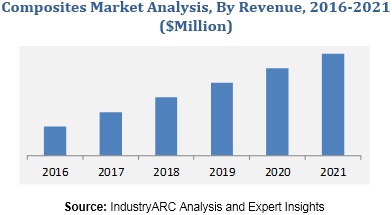
The global composites market revenue was valued at $82,727 million, according to this IndustryARC market research report, with the demand estimated to increment at a positive CAGR of 5.6% during the forecast period of 2019 to 2025. The global composites market size is consistently expanding owing to the infinite applications of composites in numerous end-user industries including construction, industrial, automotive, defense, sports, and aerospace. However, the analyst of the report pinpoints the construction and automotive industries to generate the most prominent chunk of demand. 

As per the findings of the report, the construction and infrastructure application segment of the composites market is blooming at an above average CAGR of 6.3% through to 2025. The analyst attributes this to urbanization across both developed and developing economies. According to the World Bank Group, the International Financial Corporation (IFC) estimates investment opportunity of $16 trillion by 2030 exists for the development of green buildings in Paris. Over in Asia Pacific, Chinese and Indian building and construction industry players are leveraging new techniques of prefabricated prefinished volumetric construction (PPVC), 3D printing, and new materials thanks to composites. With such an influx in the global construction industry, the composites market is expected to grow consequently. On the back of expansive landscapes and massive population, the Asia-Pacific region is projected to dominate the global composites market, seizing 37% of the total demand share.


Composites Market: Product Attributes
Engineers and designers across the world recognize the capability of composite materials to produce durable, cost-effective, and high-quality products. Composites raise performance levels and supports the development of innovative products. Composites are materials manufactured by combining two or more types of artificial or natural elements with the same or varying chemical properties. The process of mixing these two elements makes the final composite much stronger and flexible than individual products. These composites are often referred to as alloys or fiber reinforced plastic (FRP). To manufacture these composites, composite particles such as polyacrylonitrile among other polymers go through various processes such as thermosetting, filament winding process, pultrusion process, and compression molding process. The final products achieved from these processes are fiberglass, carbon fiber, and carbon fiber reinforced plastics (CFRP).  

The Composites Market in Construction and Infrastructure Industry
The construction and infrastructure industry is the prime consumer of composites. With construction happening at a rapid pace, the composite market is supposedly expected to reach its apex. The incessant construction of buildings, swimming pools, storage tanks, countertops, bridges, skyscrapers, and commercial landscapes throughout the developed and developing economies is augmenting the growth in the composite market. The emergence of achieving the most durable and lightweight structures has raised the level of engagement of composites in the construction industry. The humungous demands for composites are seen from the APAC region owing to the high speeded construction in developing economies such as India and China. 

Composites Market

The Composites Market in Automotive and Aerospace Industry
Fiber-reinforced composite materials have propelled despite their high cost mainly because of the requirements of high-performance products such as aerospace components including wings, tails, propellers, fuselages, helicopter rotor blades, spacecraft equipment. The Airbus A350 and Boeing 787 aircraft components are majorly manufactured using composites. They are also used in the manufacturing of boats, fishing equipment, kayaks, dinghies, and scull hulls. Additionally, among land vehicles, composites are used for the production of cars, bikes, and cycles. The eminent thrill of speed in various sports cars is achieved using durable and lightweight composite materials such as carbon fiber. The chassis of numerous two-wheelers and cycles are manufactured using composites. The emerging electrification among vehicles to replace conventional fuel has immensely increased the employment of composites in the automotive market. The global awareness to tackle carbon emissions is booming the electric vehicle industry, which in turn has resulted in growth in the composite market.    


The Composites Market in Textile and Apparel Industry
The textile industry saw the innovation of nylon wearables. These wearables were developed to serve the purpose of being water resistant which means, the water will not penetrate the nylon cloth, but the downside of that garment was that it does not let water vapor pass through the cloth. 
This suffocated the garment and the sweat kept getting trapped inside. After wearing these garments for a while these clothes got wet and execrable to wear. To overcome this disadvantage, breathable fabrics were discovered. Breathable clothes are a result of composite materials. These clothes are water resistant and breathable at the same time, which means that the sweat will evaporate from the fabric. The most recent innovation in the breathable clothing market was seen from MIT Media Lab, they have developed moisture and heat responsive gym wear. This garment is a product of composites developed from combining bacterial e.coli cells with latex which resulted in this biofabric. These gears have ventilating flaps that react to the heat and sweat of the person wearing it. The application of composites in the wearable section also lies in the production of firefighting armor. Traits such as fire resistant and light-weighted architecture has induced the usage of composites in this sector.  

The Composites Market in Sports Industry 
Seven out of ten most popular outdoor games today are using composites as the major raw material to manufacture sports equipment. Sports industry extensively uses the composites for the production of multiple sporting equipment.  Manufacturing of baseball bats, tennis, badminton and squash racquets, fishing rods, hockey sticks, and helmets is responsible for the growth of the composites market.  


Composites are materials manufactured by combining two or more types of artificial or natural elements with the same or varying chemical properties. The composites market size is mounting owing to the countless applications of composites in various end-user industries such as construction, industrial, automotive, defense, sports, and aerospace industry. The construction and infrastructure industry is the biggest consumer of composites. Also, the automobile industry is stroking the composites market. Breathable clothes are a result of composite materials. Moreover, sports industry extensively uses the composites for the production of multiple sporting equipment.  The market outlook is foreseeing the strongest future in the APAC region. 


"We also publish more than 100 reports every month in “Chemicals and Materials”, Go through the Domain if there are any other areas for which you would like to get a market research study."

Content Delivery Network (CDN) Market - Forecast(2020 - 2025)

Posted in , , ,

 Content delivery network market value was $11.85 billion in 2019 and is anticipated to see an upsurge during the forecast period. The market will reach $24.70 billion till 2025 growing at a CAGR of 13.4% in between 2020 to 2025. Exponentially increasing internet penetration in all the industry verticals along with the increasing utilization of this type of delivery network for traffic handling and latency reduction owing to their effective data handling has been stimulating the market growth across the globe


Report Coverage
The report: “Content delivery network market– Forecast (2020-2025)”, by IndustryARC covers an in-depth analysis of the following segments of the Content delivery network market. 

By Type – Static, dynamic, streaming
By Service Provider – Peer 2 Peer, Cloud CDN, Traditional CDN, Telco CDN
By Deployment Model – cloud, on-premise
By Solution – media delivery, web performance optimization, DRM and transcoding, monitoring and analytics, transparent caching, data security and cloud storage
By End User Industry – Online gaming, media and entertaniment, advertising, public sector, E-commerce, healthcare, ISPs, Education, others
By Geography - North America (U.S, Canada, Mexico), South America(Brazil, Argentina and others), Europe(Germany, UK, France, Italy, Spain, Russia and Others), APAC(China, Japan India, SK, Aus and Others), and RoW (Middle east and Africa)


Key Takeaways
  • Americas is estimated to hold the prominent share of 38% of global CDN market in 2019 and is forecast to reach $9.18 billion by 2025 growing at CAGR of 13.2% during 2020-2025 driven by enterprises opting for CDN solutions.
  • Media delivery segment held the major share accounting to around 34% in 2019 attributed to the rapid increase in internet users across the globe
  • Due to Covid-19 situation, there is an increase in work from home options, which can directly and indirectly lead to higher media consumption, thereby driving the market growth.

Solution - Segment Analysis
The Content delivery network market is segmented into media delivery, web performance optimization, DRM and transcoding, monitoring and analytics, transparent caching, data security and cloud storage by solution. Media delivery segment held the major share accounting to around 34% in 2019. Content delivery network market value with respect to media delivery solutions was $4.06 billion in 2019 and is anticipated to see an upsurge during the forecast period. The market will reach $8.6 billion till 2025 growing at a CAGR of 13.66% in between 2020 to 2025. There is a rapid increase in internet users across the globe, which in turn had affected the speed and performance of the websites. Owing to this problem there is a need of media delivery solution.

 End User Industry - Segment Analysis
Media & Entertainment is the dominant end user industry of content delivery network market accounting for 30% share of the market in 2019. With media delivery and web performance optimization solutions, users can flawlessly view and access the high definition video content. Various web elements such as video, software updates, games, social media and other content can be delivered more efficiently without building out costly infrastructure. Social networking sites such as Facebook, twitter and others are also one of the reason increasing internet traffic.  Approximately, 1500 million are registered users in social networking sites currently. Growing demand from audiences for accessing online audio and videos coupled with flawless viewing experiences on any devices such as smartphones, laptops, tablets and others to accelerate the content delivery network market

Geography - Segment Analysis
Americas is estimated to hold the prominent share of 38% of global CDN market in 2019 and is forecast to reach $9.18 billion by 2025 growing at CAGR of 13.2% during 2020-2025. The market is analyzed to be driven by enterprises opting for CDN solutions. Media and entertainment industry accounted for the major value for the Americas CDN market in 2019 with online gaming poised to witness the highest growth of CAGR 18.95% during 2020-2025. The largest growing CDN market is APAC which is forecast to grow at CAGR 18.46% from 2020 to 2025 projecting to $7.49 billion by 2025. The market is poised to be driven by growing SMEs which opt for cloud CDNs and P2P CDNs owing to its cost effectiveness and flexibility. The growth is also estimated to be assisted by increasing access of internet through smartphones and portable computing devices for gaming and media consumption. Penetration of large scale e-commerce websites along with the consumers’ preferences for online shopping is also pushing for the employment of CDNs by the mobile companies which has boosted the market growth in this region.


 Drivers – Content delivery network market
  • CDN can decrease loading time, website latency and handle traffic spikes 
Over the course of the last decade, the number of internet users worldwide has tripled from 1 billion in 2005 to 4 billion in 2019. With an expanding user base and global audience, websites need to ensure content is available no matter the amount of traffic or distance from the origin website servers. The distributed network of servers that make up a CDN can decrease loading time, website latency and handle traffic spikes. On a global scale, IndustryARC is forecasting more than two-third of the world’s population will have a smartphone by 2025. By comparison, in 2011, this percentage hovered at about 10 percent. A dynamic CDN optimized for mobile content delivery assists in providing users with a smooth and speedy interaction with a website.

  • Surge in global B2C e-commerce sales
According to IndustryARC, by 2019, global B2C ecommerce sales are expected to reach $2 trillion. A website with a CDN can better handle sharp spikes in traffic, like those during sales or big events, by distributing and directing traffic over its available servers. CDN takes it one step further with its Dynamic Web Acceleration service, a proprietary language that compresses round trips between the user’s interface and origin servers. 

  • Work from home policy due to covid-19
Due to Covid-19 situation, there is an increase in work from home options, which can directly and indirectly lead to higher media consumption. Remote classes and training plans also will contribute to increased IP traffic, which will lead to higher utilization of CDNs across countries.

Challenges – Content delivery network market
  • High associated costs
As consumers demand ever-greater amounts of high-quality content over the Internet, service providers (SPs) are finding it difficult to increase revenues while containing costs. This is due mainly to two trends: (1) over-the-top (OTT) content providers have outsourced the delivery of content to pure-play content delivery network (CDN) companies, and (2) traffic growth (with no resulting revenue benefit) is increasing network build-out and maintenance costs for SPs. 


Market Landscape
Product launches, acquisitions, and R&D activities are key strategies adopted by players in the Content delivery network market. Content delivery network market is expected to be dominated by major companies such as Amazon Web Services Inc. (U.S.), Akamai Technologies (U.S.), Level 3 Communications (U.S.), Verizon Digital Media Services (U.S.) and Limelight Networks (U.S.) among others.

Acquisitions/Technology Launches/Partnerships
  • In April 2019, AWS enhanced Amazon CloudFront’s security, and now it requires to attach SSL/TSL certificate when one adds an alternate domain name to a distribution.
  • In April 2019, Google partnered with Deloitte to expand its partnership with Deloitte to bring the cloud to more industries including healthcare and life sciences, financial services, and retail.
  • In April 2019, Deutsche Telekom partnered with G&L GmbH to strengthen its content delivery and web security solutions. G&L GmbH will enable comprehensive services in the areas of design, integration, management, and operations.


"We also publish more than 100 reports every month in “Information and Communications Technology”, Go through the Domain if there are any other areas for which you would like to get a market research study."

Silicon Photonics Market - Forecast(2020 - 2025)

Posted in , , , ,

 Silicon Photonics Market Overview:

Silicon photonics is one of the major technologies in the telecommunication industry. The main logic behind advancements in the silicon photonics is the dire need to obtain the final goal in terms of high-density data communication which is reliable, cheaper, and less energy consuming. Various manufacturers from different regions are investing in developing integration capability that will elevate their business and will also lead to the silicon photonics market demand growth. Owing to the increasing demand for better high bandwidth and power efficiency, the global silicon market value had ballooned to $774.15 million in 2018, and the opportunities will increment at a compound annual growth rate (CAGR) of 20.90% during the forecast period of 2019 to 2025.

Request Sample

 North America is positioned as the leading region in the silicon photonics market. As per a report by Cisco, North America leads all regions in network speeds and latency segment, with an average mobile download speed of 34.3 Mbps and upload speed of 15.5 Mbps.[1] The growing demand for constant and increased network data and information transfer speed are influencing the North America silicon photonics market that had a regional market share of 29.24% in 2018.

 Silicon Photonics Market Outlook:

Silicon photonics is the application of photonic systems which use silicon as the optical medium for transfer of data in fiber optic telecommunication systems. Semiconductor fabrication techniques are used to make silicon photonics devices. Silicon is used as the substrate in the integrated circuits, and due to this functionality, the hybrid devices optical and electronic components can be integrated into a single microchip. The components used in the bulk silicon layer require to be independent in order to improve the performance and reduce parasitic capacitance. The method used to achieve the functionalities is known as silicon on insulator (SoI). The propagation of light through silicon is managed by two-photon absorption (TPA). Many electronics manufacturers such as IBM and Intel have been doing a thorough research on silicone photonic for a decade.

Data centers were found to be the largest application in the silicon photonics market. As per the report by the Cisco, the hyper scale data centers will grow from 338 in 2016 to 628 in 2021 which represents an increase in 53% of all the installed data center servers by 2021.[2] The increased installments of data centers owing to the increased traffic from consumers provide huge opportunities for the silicon photonics market players that can provide services to improve the performance by addressing the interconnection issues and therefore, the scope for silicon photonics market is augmented in the application segment. The data centers application is projected to upsurge in the silicon photonics market with a substantial CAGR of 28.37% through to 2025.

Inquiry Before Buying


Silicon Photonics Market Growth Drivers

·The consistent rise in the use of smartphones and the internet facilities has led to an augmented adoption of silicon photonics transceivers for the telecommunication application, and it is anticipated to drive a demand influx in the silicon photonics market.

· The use of social networking sites and consumer-based applications are giving rise to load of data on an everyday basis. The increasing demand for storage space is attributed to the growth in demand for silicon photonics.

·Government influencing the population to move forward towards e-banking and internet-based money bank operations is also significantly driving the silicon photonics market.

· Due to increase in the traffic, many valuable data center vendors are planning to spread the data centers volume across the possible sites. The need for long distance data transfers is poised to increase the demand for silicon photonics in the near future.


Silicon Photonics Market Trends:

·The advancement in silicon photonics with the use of optical interconnects helps to provide faster data transfer with and within microchips.

·Due to the growth of cloud computing technology, various enterprises are shifting towards Software as a Service (SaaS) application which increases the data centers activities. The cloud-based applications manage the data center loads, and the demand for such applications are influencing the demand for silicon photonics.

·The trend of on board silicon photonics with 2.5D integration is massively adopted by several large scale data centers. This is positively impacting the silicon photonics market.

·The organization named as Luxtera collaborated with TSMC to develop the silicon photonics platform in TSMC’s 300mm CMOS wafer foundry. The platform will help to serve cloud, enterprise, and 5G mobile infrastructure customers with high performance and low-cost transceivers.

Schedule a Call


Silicon Photonics Market Challenges:

The packaging and reliability of silicon photonics components are creating challenges for the vendors in the silicon photonics market. Also, silicon pattering & process control and coupling & temperature dependence are some major challenges faced by the manufacturers in the silicon photonics market. Many manufactures are adopting codesign and cosimulation of complex circuits and photonics. The gaining verification and variability algorithms can help overcome the challenges and handle photonics circuits.

Silicon photonics Market Key players Perspective:

Some of the major players in the silicon photonics market are Acacia, Luxtera, Intel, Cisco, Mellanox, Finisar, STMicroelectronics, Hamamatsu, IBM, Juniper, Global Foundries, Broadcom, Oclaro, NeoPhotonics, and Ciena.

Silicon Photonics Market Research Scope:

The base year of the study is 2018, with forecast done up to 2025. The study presents a thorough analysis of the competitive landscape, taking into account the market shares of the leading companies. It also provides information on unit shipments. These provide the key market participants with the necessary business intelligence and help them understand the future of the Silicon Photonics Market. The assessment includes the forecast, an overview of the competitive structure, the market shares of the competitors, as well as the market trends, market demands, market drivers, market challenges, and product analysis. The market drivers and restraints have been assessed to fathom their impact over the forecast period. This report further identifies the key opportunities for growth while also detailing the key challenges and possible threats. The key areas of focus include the types of Silicon Photonics market, and its segmentation on the basis of product type that includes switch, cable sensor, and transceiver.


Silicon Photonics Market Report: Industry Coverage

The report analyses the product demands by the Silicon Photonics Market on the basis of application that includes data centers, healthcare, military & defence.

The Silicon Photonics market report also analyzes the major geographic regions as well as the major countries in these regions. The regions and countries covered in the study include:

North America: The U.S., Canada, Mexico

South America: Brazil, Venezuela, Argentina, Ecuador, Peru, Colombia, Costa Rica

Europe: The U.K., Germany, Italy, France, the Netherlands, Belgium, Spain, Denmark

APAC: China, Japan, Australia, South Korea, India, Taiwan, Malaysia, Hong Kong

Middle East and Africa: Israel, South Africa, Saudi Arabia


"We also publish more than 100 reports every month in “Electronics”, Go through the Domain if there are any other areas for which you would like to get a market research study."