Welcome Message

twitter

Follow on Tweets

Augmented and Virtual Reality Market - Forecast(2021 - 2026)

Posted in


Augmented Reality (AR) & Virtual Reality (VR) Market Overview

The AR and VR market was estimated to grow to $140.1 billion by 2026, growing at a CAGR of 38.4% from 2021 to 2026. The market is driven by the increasing popularity of Augmented & Virtual Reality Devices due to better user engagement with a high recall rate. The commerce industry saw a huge change when e-commerce concept gained mass adoption. Prominent companies such as Walmart, Blockbuster suffered when people began purchasing products online, and players such as Amazon, eBay and Netflix gathered the majority of market share. Owing to such demand, augmented reality market and virtual reality market are gaining traction. AR and VR tools inhibits the confinement of human physical possibilities and relishes one’s quest for all sorts of endeavors. Augmented reality market and virtual reality market growth is not only fueled by entertainment content but also expands to healthcare, aviation, and defense sectors in particular. The rising dependence on Head Mounted Displays and Gesture Tracking devices for virtual reality games applications is set to drive the market growth.

Report Coverage

The report: “AR and VR Market– Forecast (2021-2026)”, by IndustryARC covers an in-depth analysis of the following segments of the AR and VR Market.
By Type – AR (Hardware, Software and Services), VR (Hardware, Software and Services).
By Device Type – AR (HMD, HUD), VR (HMD, Gesture Control Device, Projector and Display Wall).
By Technology – AR (Marker, Markerless), VR (Non-Immersive, Semi-Immersive and Fully Immersive).
By End Use Industry – Aerospace and Defense, Retail, Gaming and entertainment, Medical, Commercial and Others.
By Geography - North America (U.S, Canada, Mexico), South America(Brazil, Argentina and others), Europe (Germany, UK, France, Italy, Spain, Russia and Others), APAC(China, Japan India, SK, Aus and Others), and RoW (Middle east and Africa).

Key Takeaways

  • One of the major driver is the rise in adoption of smartphones. Hence, Mixed Reality devices incorporated/enabled with smartphones offering plug and play features would cause a paradigm shift to the mixed reality devices market. For instance, Lenovo has developed a new smartphone “Phab 2 Pro” enabled with Google Tango which offers mixed-reality features to an extent.
  • Both Augmented Reality and Virtual Reality technically elaborates the scope of E-Commerce and took the interaction to a whole new level altogether.
  • As per IndustryARC research, more than 60% of online shoppers prefer to purchase items that offer Augmented Reality on websites in one way or the other. It’s inarguable fact that both Augmented Reality and Virtual Reality has increased user interaction for many companies and helped them to upsurge their user base.

    AR and VR Market, By Type, 2020

    Augmented Reality (AR) & Virtual Reality (VR) Market
    For More Details on This Report - Request for Sample

AR and VR Market Segment Analysis - By Device Type

In Device Type Segment, Video Walls stood as the fastest growing subset with an estimated CAGR of 35% during the forecast period. MAR (Mobile Augmented Reality) is expected to account for more than 52% of AR Application Market by 2026. Microsoft is now selling development versions of its mixed-reality visor called the HoloLens and Magic leap which is a new start up based in Florida has also come up with smart glasses technology, a pair of transparent glasses, which are capable of sending the user into a mixed reality world. Augmented reality in combination with virtual reality is going to be a next big thing in APAC tourism industry. Country like China is investing a huge amount of money in their tourist industry by developing various novel technologies to stand out and attract tourists. Mixed reality in the form of head mounted displays is used in industrial & construction applications, predominantly for quality control in production and holographic non-destructive testing, which is a form of fracture testing.

AR and VR Market Segment Analysis - By End Use Industry

Engineers can use AR headsets for on job improvisation centered to the fact that the human mind processes technical information more efficiently presented in a 3D format faster than having to translate it from a 2D perspective. VR is becoming an integral backbone of numerous drill programs for future accident and emergency doctors, aiding for better preparation of practitioners for surgery using VR systems, before having to commence actual patients. A classic business application example of AR headsets can be derived from the manufacturing process of Boeing, 78-7 Freighter. Google Glass is being employed by aircraft engineers during wire assembly process to visualize the information right before their eyes, with video and voice instructions, for efficient and faster operations. Amazon, uses AR technology to allow customers to project versions of furniture and electronics into their households to help analyze physicality. Aerospace and military training is well optimized with the application of augmented and virtual reality devices to create real-life situations for trainees and also to keep a detailed tracked of their performance. AR and VR device’s convergence with IoT can transform the situations to be more genuine and apt for effective learning.

AR and VR Market Segment Analysis - By Geography

Being one of the most advanced settlement in terms of cutting-edge technology being implied in all its industrial operations, North America is reckoned to be dominating the global augmented reality market and virtual reality market demand. This region, housing some of the pioneering players such as Google Inc., Microsoft Corporation, and Facebook, is responsible for a substantial 34% of the global demand as of 2020. Such dominance can be attributed to its existing healthcare, aerospace, defense, and retail management sector already equipped with sound technologies compatible for the adoption of augmented and virtual reality gears such as smart glasses and virtual retinal display.

AR and VR Market Drivers

Rising Investment from Market Leaders

The market for AR and VR is rising due to increased investment from market leading players. Facebook integrating augmented reality ads into its application: Facebook will be providing users an augmented reality experience via advertisements in the application. Users of the application may view fashion goods such as eye glasses and shoes, and try them on virtually.

IKEA introduced an AR app named Place, which enables Apple users to set IKEA furniture in their apartments and preview an interior before buying products. Thanks to this solution potential customers can choose furniture easier.. eBay collaborated with local firm to open virtual stores in Australia. eBay was one of the first movers in the market, when the industry began developing applications for this technology. Amazon is also offering VR experiences in select cities. Amazon is trialling VR with a view to boost their Prime Day sales. Another e-commerce giant, eBay did the same in 2016 in Australia. We can expect these big players raise the awareness of the technology through such events before potential app launches thus driving market awareness and thereby the market.

Rising Focus on Improving Customer Experience

Augmented Reality & Virtual Reality is a perfect mix of technologies to engage a customer. A memorable happy experience often leads to a satisfied customer. AR/VR technologies are likely to give an enriching experience to the customer which increases the chances of customer satisfaction significantly. As this technology is meant to make it easy and memorable for customers and it is likely to have an upper hand in leading to satisfied customers for companies as well. Customer engagement and Interactivity is not only required after onboarding the customer but is important to aware and attract as well. These AR/VR technologies can extensively be used as marketing tools to spread awareness about a product. This enhanced customer experience offered through AR and VR solutions will drive market growth.

AR and VR Market Challenges

Lack of Awareness of AR Content

The biggest challenge with AR is the lack of awareness of AR content from consumers. AR and VR content can come in many forms, and this could be a cause for confusion. There’s still not much clarity over whether consumers are aware these tools are available to them, or if they realize they’re engaging with AR or VR when they use them. In a recent research study conducted by GWI in the UK and U.S., we found that over 90% of consumers in these markets are aware of VR, with around 65% saying they’re aware of AR. Awareness of AR hovers between the 70-75% mark among the 16-44 age group, but drops dramatically among 45-54s (56%) and 55-64s (44%). By gender, males (71%) display a notably higher level of awareness of AR compared to women (59%). This has resulted in limited focus on the AR market especially for applications outside gaming.

AR and VR Market Landscape

Product launches, acquisitions, and R&D activities are key strategies adopted by players in the AR and VR market in Commerce. Key Companies operating in the market include Amazon, Ikea, Facebook, Sephora, BMW, Harley Davidson, Sotheby and various other companies.

Acquisitions/Technology Launches/Partnerships

  • In April 2021, Inpixon announced the acquisition of a suite of augmented reality (AR), computer vision, localization, navigation, mapping, and 3D reconstruction technologies, including patents, trademarks, software and related intellectual property from Visualix.
  • In April 2021, Facebook announced it has acquired Downpour Interactive, the studio behind the hit multiplayer military simulator Onward.

Related Reports

Augmented & Virtual Reality Content & Application Market - Forecast(2021 - 2026)
Report Code: ITR 0093

Augmented Reality & Virtual Reality Market For Gaming Industry - Forecast(2021 - 2026)
Report Code: ITR 0083

For more Information and Communications Technology related reports, please click here
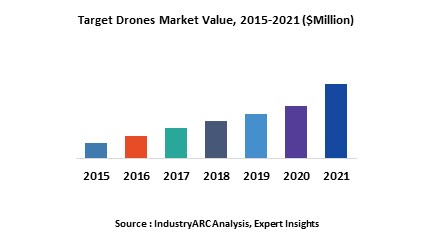
Target Drone Market - Forecast(2021 - 2026)

Posted in

 For various defense operations such as border patrolling remotely controlled unmanned vehicles are used which are known as aerial drones are used. Target drones are a subclass of aerial targets that are specifically created for Research, Development, testing & Evaluation (RDT&E) purposes. This encompasses many applications such as target and decoy, training, reconnaissance. The primary factors that have been driving the growth of this market include increase in spending of aerial target developments, initiatives for unmanned combat aerial vehicle programs and emphasis on testing & evaluation and training.


Americas is the dominating market which held a major revenue share in 2015 mainly driven by investments in Special Forces, UAVs and fighter aircraft able to carry ground attacks. APAC attributed the fastest growth rate resulting from developing nations such as China and India developing indigenous air based defense equipment to reduce their import spending on defense. This growth was followed by Europe and RoW. The global target drone market was estimated to be $ 4.05 billion in 2017 and is expected to grow with CAGR of 8.51% during the forecast period.

What are Target Drones?

Target Drones are unmanned aerial vehicles that are controlled from a remote location. Target drone is intended as a system with ground to air defense role and for training purposes.  These are employed by the professionals for testing combat and for training of anti-aircraft crews. The technology has aided to the manufacturing of target drones getting more efficient and the designs are also marvelous with computer assistance.

What are the major applications for Target Drones?

Target drones are primarily being used by the armed forces to support the operational activities of new weapon systems. They are high performance unmanned aerial vehicles hence are being applied for advanced applications such as aerial filming and data sensing. Aerial mapping drones are high-end drones and are enabled with features such as GPS and RTLS embedded on the system similarly loaded aerial survey drones are also available for the military as well as commercial applications. The military generally use these target devices for training purposes and also for calibration of equipment.


Target Drone Market

Market Research and Market Trends of Target Drones Ecosystem

  • Fuel cells are becoming more practical and will be employed soon as the primary source of power. Fuel cells are still expensive and are slower to respond to load changes. HES Energy Systems is a Singapore-based company which recently announced manufacturing of hydrogen fuel cells for drones that are the smallest and lightest for the power delivered or energy stored in the world. 
  • Aerialtronics is employing drones for industrial inspection in various fields. They have a UAV that can autonomously fly around wind turbines and cell towers, detect faults and generate reports more quickly. Artificial Intelligence enabled smart drones will be able to navigate and solve tasks more autonomously. These type of drones are increasingly gaining popularity and are expected to intervene in the target drone market soon.
  • A contract to work with the Defense Department on a pilot, dubbed “Project Maven has been secured by tech giant Google. The contract is aimed at assisting the U.S. military to use the artificial intelligence systems. The project will be responsible for target drone strikes, and analyzing the massive trove of video recorded by surveillance cameras.
  • In many ways modern consumer drones are becoming more advanced than far more expensive military systems. The best consumer models are now being redeployed for commercial use, often with little or no modification. And just as with smartphones, people who enjoyed playing with consumer drones realized it made sense to take them to work too. Even military users are beginning to pay attention to developments in the consumer market and regulatory bodies such as FAA have been set up to prevent misuse of different types of drones.
  • Sensofusion from Finland was recently included in a group of companies selected by the U.S. FAA for a cooperative program aimed at the development of drone protection, location and prevention for airports. The objective of FAA is to find a system that can be deployed on air bases to spot, block and drop the unwanted unmanned aircraft systems before they get anywhere near the boundary fence, never mind into controlled airport airspace. The other companies added to the FAA Pathfinder Program at the same time include Gryphon Sensors and Liteye Systems. 

Who are the Major Players in Target Drones market?

The players profiled in the report include Boeing (U.S.), Lockheed Martin (U.S.), Northrop, Grumman (U.S.), Meggit (U.K.), GoPro, Intel, Ambarella, FLIR, Workswell.

What is our report scope?

The report incorporates in-depth assessment of the competitive landscape, product market sizing, product benchmarking, market trends, product developments, financial analysis, strategic analysis and so on to gauge the impact forces and potential opportunities of the market. Apart from this the report also includes a study of major developments in the market such as product launches, agreements, acquisitions, collaborations, mergers and so on to comprehend the prevailing market dynamics at present and its impact during the forecast period 2018-2024.
All our reports are customizable to your company needs to a certain extent, we do provide 20 free consulting hours along with purchase of each report, and this will allow you to request any additional data to customize the report to your needs.

Key Takeaways from this Report

  • Evaluate market potential through analyzing growth rates (CAGR %), Volume (Units) and Value ($M) data given at country level – for product types, end use applications and by different industry verticals.
  • Understand the different dynamics influencing the market – key driving factors, challenges and hidden opportunities.
  • Get in-depth insights on your competitor performance – market shares, strategies, financial benchmarking, product benchmarking, SWOT and more.
  • Analyze the sales and distribution channels across key geographies to improve top-line revenues.
  • Understand the industry supply chain with a deep-dive on the value augmentation at each step, in order to optimize value and bring efficiencies in your processes. 
  • Get a quick outlook on the market entropy – M&A’s, deals, partnerships, product launches of all key players for the past 4 years. 
  • Evaluate the supply-demand gaps, import-export statistics and regulatory landscape for more than top 20 countries globally for the market. 
For more Aerospace and Defense related reports, please click here

Video Conferencing Market - Forecast(2021 - 2026)

Posted in


Overview

Video Conferencing Market is forecast to reach $6.65 billion by 2025, after growing at a CAGR of 8.50% during 2020-2025. Video Conferencing is considered as visual communication session between two or more users irrespective of their location, featuring video and audio content transmission in real-time. Integration of video conferencing or online meeting tools with advanced technologies such as the Internet of Things (IoT) and Artificial Intelligence (AI) is set to drive the video conferencing industry. Growing adoption of video conferencing solutions in corporate sector and other end-user verticals such as education, healthcare, and the government will further enhance the overall demand for Video Conferencing market size during the forecast period 2020-2025.


Report Coverage

The report: “Video Conferencing Market – Forecast (2020-2025)”, by IndustryARC, covers an in-depth analysis of the following segments of the Video Conferencing industry outlook.

Key Takeaways

  • North America dominates the Video Conferencing market owing to early adoption of advanced technologies and high fundraising from this sector.
  • Development and growing adoption of 5G technology in developed and developing countries is set to fuel the video conferencing market growth. Adoption of cloud-based deployment models make video conferencing easy to turn just about any place with an internet connection and a power outlet into a video-enabled collaboration space.
  • Increasing adoption of new technologies such as the Internet of Things (IoT) and Artificial Intelligence (AI) is another factor driving market growth.
  • Development of software and solutions such as online meeting tools and others at affordable prices and acquisition of various companies for expanding its services in various regions have been driving the Video Conferencing market growth.

Deployment - Segment Analysis

In the Deployment Type, the cloud-based deployment segment is expected to hold a larger market size than the On-Premise deployment. Cloud-based solutions offer increased convenience to end-users by enabling easy access to the video conferencing platform through multiple channels, such as laptops, tablets, and mobiles. Emerging trends such as Bring Your Own Device (BYOD) and mobile workforce have resulted in extensive adoption of cloud-based services. Increasing popularity and adoption of cloud-based solutions have resulted in the development of better encrypted and password-protected solutions. Furthermore, the increase in usage of cloud-based solutions and incorporation of virtual reality (VR) in video conferencing techniques are further driving the video conferencing solutions. Alongside this, the benefits associated with cloud models such as cost-effectiveness, scalability, and flexibility also augment the demand for cloud-based deployment.

End-Use Industry - Segment Analysis

In End Use Industry vertical, corporate sector leads the Video conferencing market as it is an effective communication tool and assists in reducing travel and operational costs for small and large-scale enterprises. In corporations, this technology is mainly used for cost-effective, real-time, and long-distance communication and for augmenting the productivity of various teams based in multiple locations. As the approach of corporate business owners with respect to modern communication systems and their implementation at the workplace changes, the deployment of video conferencing solutions for video meetings, group webinars, and enterprise-level discussions in the corporate spectrum is bound to become commonplace which will fuel the market growth.

Geography - Segment Analysis

North America dominated the Video Conferencing market with a share of around 35.49%, followed by Europe and APAC owing to increasing adoption of video conferencing systems for upgradation or replacement of systems and early adoption of advanced technologies such as IoT and AI. In 2019, StarLeaf, a leading provider of video conferencing services which is headquartered at U.K. had strengthened its presence in the U.S. with the unveiling of offices in New York City and Chicago to serve as strategic centers of support for enterprise customers. It has resulted in rapid growth in adoption of cloud-based video conferencing and increased the company’s footprint at U.S. covering organization across a wide range of sectors, thereby pushing the video conferencing market growth in North America.

Drivers – Video Conferencing Market

  • Integration with advanced technologies such Internet of Things (IoT) and Artificial Intelligence (AI) Growing demand for smartphones and increasing adoption of 4G and 5G technologies

In recent years, in some of the developed countries, video-enabled communication has become a critical component of the productivity strategy for most of the organizations. Advancements in AI improve the user experience and drive incremental efficiencies by assisting automate time-consuming collaboration tasks. Natural language processing (NLP) one of the AI technology can be used to improve video conferencing from enabling the automated transcription of the meeting, sharing actions and notes, and translating the conversation into different languages. NLP combined with AI can also enable virtual assistants and chatbots to start, join, and leave meetings through voice command. It also enables better audio quality by automatically suppressing echo and minimizing background noise. The integration of industries with IoT technology will also drive the demand for the video conferencing market. For instance, in 2017, video conferencing startup Owl Labs had raised $6 million funding by Matrix Partners. Growing funding of video conferencing startups and the innovations being brought to light are set to propel the market growth.  

  • Adoption of 4G and 5G technology set to boost the video conferencing market

The development of 4G and 5G at affordable prices has brought video conferencing to the forefront of remote working. In 2019, Ericcson and Qualcomm Incorporated had completed the first-ever live 5G video conference in India using 28 GHz spectrum. With the adoption of 5G technology, there has been an increase in network speed and bandwidth that support in high quality of video conferences. This has helped in better video conferencing quality even in remote locations, thereby driving the video conferencing market in the near future. 

Challenges – Video Conferencing Market

  • Low bandwidth and network connectivity issues hamper the video conferencing market growth

Technical issues associated with smooth transmissions that could result from software, hardware, low bandwidth or network connectivity create difficulties in video conferencing that hampers the growth of the market. Setting up video conferencing in the corporate sector can be a bit expensive for small-sized businesses or enterprises. Advanced features and capabilities have been increasing the cost and the need for training have been restraining the video conferencing market growth.

Market Landscape

Technology launches, acquisitions, and R&D activities are key strategies adopted by players in the Video Conferencing market. In 2019, the market of Video Conferencing has been consolidated by the top five players - Adobe Systems Inc, Plantronics, Inc, Avaya Inc, Cisco Systems Inc, Microsoft Corporation and among others.


Acquisitions/Technology Launches

  • In January 2019, Plantronics had launched new Calisto portable USB speakerphones in order to make calls easily for mobile and remote workers. With 360 degree audio in a compact device, these devices transmit conversations with high quality audio and voice clarity even in remote locations. Adoption of such devices set to drive the video conferencing market in near future.


  • In March 2018, Plantronics had acquired video conferencing gear maker Polycom for $2 billion. This has strengthened the Plantronics video conferencing business by expanding it various countries, thereby driving the market growth.

For more Information and Communication Technology related reports, please click here